


Why Are Ball Bearings Used in Machines?
Why Are Ball Bearings Used in Machines?
Ball bearings are ubiquitous components found in a vast array of machinery and mechanical systems, from automobiles and industrial equipment to household appliances and consumer electronics. Their widespread use is not arbitrary; rather, it stems from their unique properties and invaluable contributions to the smooth operation and efficiency of machines.
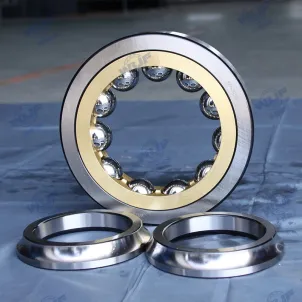
Friction Reduction: One of the primary functions of ball bearings is to reduce friction between moving parts within a machine. The rolling motion of the spherical balls between the inner and outer races minimizes contact surface area, resulting in significantly lower friction compared to sliding or rubbing surfaces. This reduction in friction translates to less wear and tear on components, lower energy consumption, and improved overall efficiency.
Load Distribution: Ball bearings are adept at distributing loads across their surfaces, enabling them to support heavy loads while maintaining smooth and consistent motion. The evenly distributed load helps prevent localized stress concentrations on individual components, prolonging their service life and enhancing reliability. This capability makes ball bearings particularly suitable for high-load applications in industrial machinery and automotive systems.
Additional reading:4 Tips to Select the Perfect BS3464 Gate Valve
Mud Pump Herringbone Gear Solution vs. Traditional Gear Mechanisms
Unlocking Precision: Straight Bevel Gear Mining in China
Unlocking Efficiency: Top Benefits of Herringbone Gears
10 Key Benefits of LYSO Scintillator Crystals in Radiation Detection
7 Key Advantages of Automotive Die Casting Solutions for Modern Manufacturing
What Is a Die Casting Mold and Its Benefits?
Precision and Accuracy: Precision-engineered ball bearings offer excellent dimensional accuracy and consistency, ensuring precise alignment and smooth operation of machine components. This precision is critical in applications where tight tolerances and minimal deflection are required, such as in precision machinery, robotics, and aerospace systems. The predictable performance of ball bearings contributes to the overall accuracy and reliability of these systems.
Low Maintenance: Ball bearings are renowned for their durability and minimal maintenance requirements. Once properly installed and lubricated, they can operate reliably for extended periods without the need for frequent inspection or adjustment. This low maintenance characteristic makes ball bearings ideal for applications where accessibility for maintenance may be challenging or cost-prohibitive, such as in sealed enclosures or remote locations.
Noise and Vibration Reduction: The smooth rolling action of ball bearings helps dampen vibrations and reduce noise generated during machine operation. By absorbing and dissipating energy, ball bearings contribute to quieter and more comfortable working environments in industrial settings and quieter operation of household appliances and consumer electronics. Additionally, reduced vibration minimizes the risk of damage to sensitive components and improves overall system performance.
In summary, ball bearings play a crucial role in modern machinery by reducing friction, distributing loads, ensuring precision, requiring low maintenance, and dampening noise and vibration. Their versatility, reliability, and efficiency make them indispensable components in a wide range of applications across various industries. As technology advances and demands for higher performance and reliability increase, the importance of ball bearings in machines will continue to grow, driving innovation and enhancing the efficiency of mechanical systems.
5 Things to Know Before Buying Smt Customized Service
Meshing and Deploying Connections for an Automobile ...
Transforming Challenges: How Smart Die Casting Solutions Can Elevate Your Industrial Machinery
What Are Key Benefits of Die Cast Medical Device Housings?
How Will AI Transform Low Volume Die Casting Mold Design?
7 Incredible Robot Die Cast Models You Need in Your Collection
10 Questions You Should to Know about Automotive Die Casting Solution
Related Articles
-
Samsung SMT Nozzle vs. Competitors: Which Offers Superior Performance?
-
Are Stacked Wave Springs the Solution to Your Design Challenges?
-
The Ultimate Buyer's Guide for Purchasing volute spring

-
Spring Disc Washer vs. Standard Washer: Which Is Better?
-
Top 7 Split Flange Manufacturers for Reliable Industrial Solutions
-
OEM Cost-Effective Metal Stamping: Top 5 Benefits for Your Business
-
What are the Advantages of Disc Springs Compared to Other Springs?

-
AMT A+ Process | High pressure aluminum die casting

Comments
0